


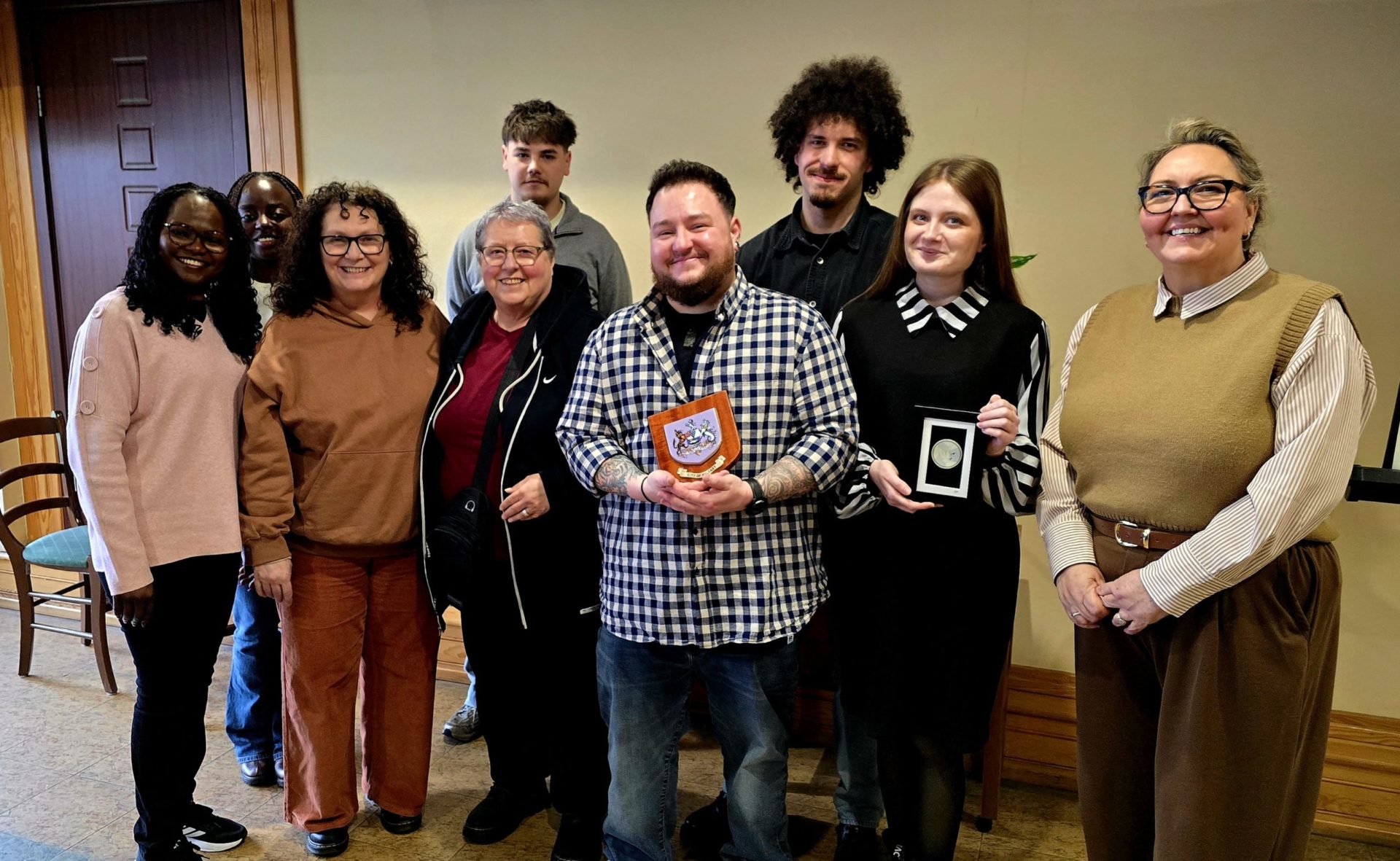
This year’s spring group of interns at the Post-Conflict Research Center (PCRC) – Anna Kranz, Karlotta Hein, Amar Gradišić, Claire Kroger and Felix Mährenbach – write about their first opportunity to learn about the history of Bosnia and Herzegovina, as well as forming connections with a group of young people from Northern Ireland who were visiting Sarajevo as part of the Youth Empowerment Programme: Inspiring the Future of Belfast (YEP) initiative.
For us, the new PCRC interns, the Spring 2026 term started with an eventful visit by a group of youth from Northern Ireland. The group was led by GEMS NI in partnership with Diverse Youth NI and Training for Women Network (TWN), and supported by Belfast City Council and the Special EU Programmes Body (PEACEPLUS Programme). Together with young people from Northern Ireland, we had the opportunity to talk to representatives of international institutions, NGOs, museums and galleries to help us learn about the past of the 1990s in Bosnia and Herzegovina.
Though separated by more than 2,000 kilometers and the European mainland, the similarities between Bosnian and Northern Irish history are greater than meets the eye. Both countries have experienced ethnonational and religiously charged division and violence. Likewise, they both stand as examples of the ongoing international struggle for peace and reconciliation.
On our first day, the groups from PCRC and YEP came together for a presentation from Amina Sejfić, Project Manager at PCRC. Amina gave a thorough overview of the fall of Yugoslavia, the Bosnian War, and where Bosnia is today. Besides being an introduction for the group from Northern Ireland, this was a great refresher for many of us interns.
After the presentation, we had a Q&A session. Topics like how the Bosnian War is taught in local schools and Bosnia and Herzegovina’s future were brought up. Members of the YEP group also asked questions based on their experiences living in and learning about Belfast and the Troubles in Northern Ireland. It was really interesting to hear their perspective on similar issues, from not just the youth but their leaders who grew up during the Troubles.
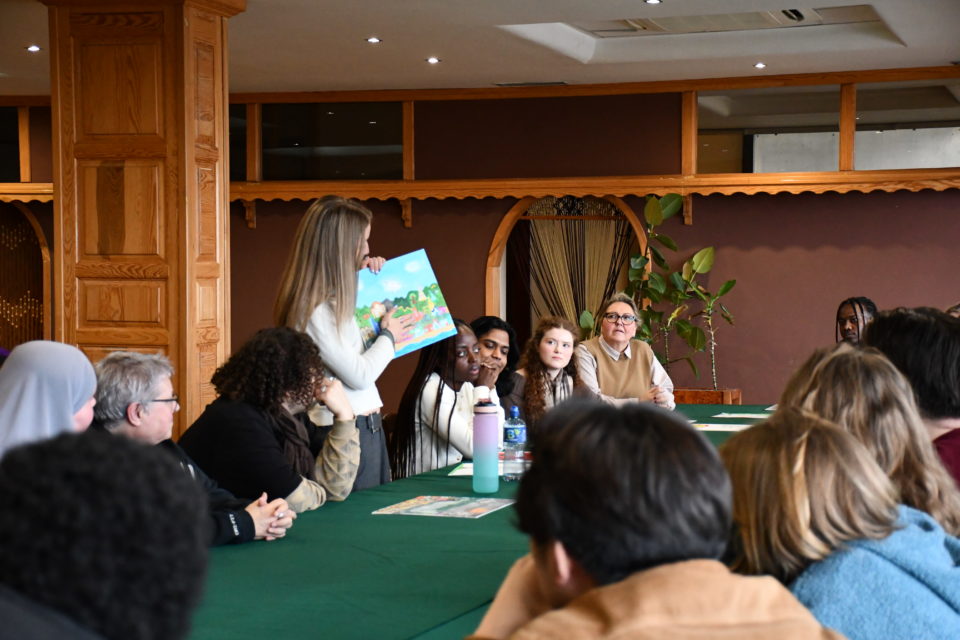
After a break for lunch, we came back together and the YEP group shared art pieces they had created inspired by their past, present, and future. After learning about and discussing heavy topics throughout the day, this was an inspiring way to end the session and reflect on how all of us can work in the present to create a more peaceful future.
After the presentation of the art pieces we visited the War Childhood Museum in Sarajevo, the only museum in the world dedicated entirely to childhoods affected by war. The museum displays personal items and stories from children affected by war, many of which stem from Bosnia and Herzegovina, but also Ukraine and Palestine. Based on the book War Childhood by Jasminko Halilović, the museum was opened in 2017 and has collected over 6000 personal items, of which 40 objects and stories are permanently exhibited in Sarajevo. The museum gained international recognition and won the Council of Europe Museum Prize in 2018 for having made a significant contribution to the understanding of European cultural heritage.
At the entrance of the exhibition is an interactive hallway, where one can vote on questions based on one’s own childhood experience. Stepping through a curtain to the part of the exhibition where all the objects and placards are displayed, one quickly realizes what a drastic contrast it is to the votes outside. One-eyed Teddy bears, a dirty children’s book, a pair of white sneakers, a football jersey, a sewing machine – all alongside short stories of the owners and their items. Reading stories from children much younger than us, who were so horribly affected by the atrocities happening around them, was hard to comprehend.
The second day of the YEP exchange program in Sarajevo began with a visit to the International Commission for Missing Persons (ICMP), where we were welcomed by the ICMP Western Balkans Senior Program Officer, Elma Majstoric Ninkovic. Here, we were introduced to the organisation’s history, the framework they use in their approach, followed by the opportunity to learn more about the Srebrenica Genocide and their assistance to the countries of the region to account for more than 70% of the 40,000 people reported missing after the conflicts in former Yugoslavia.
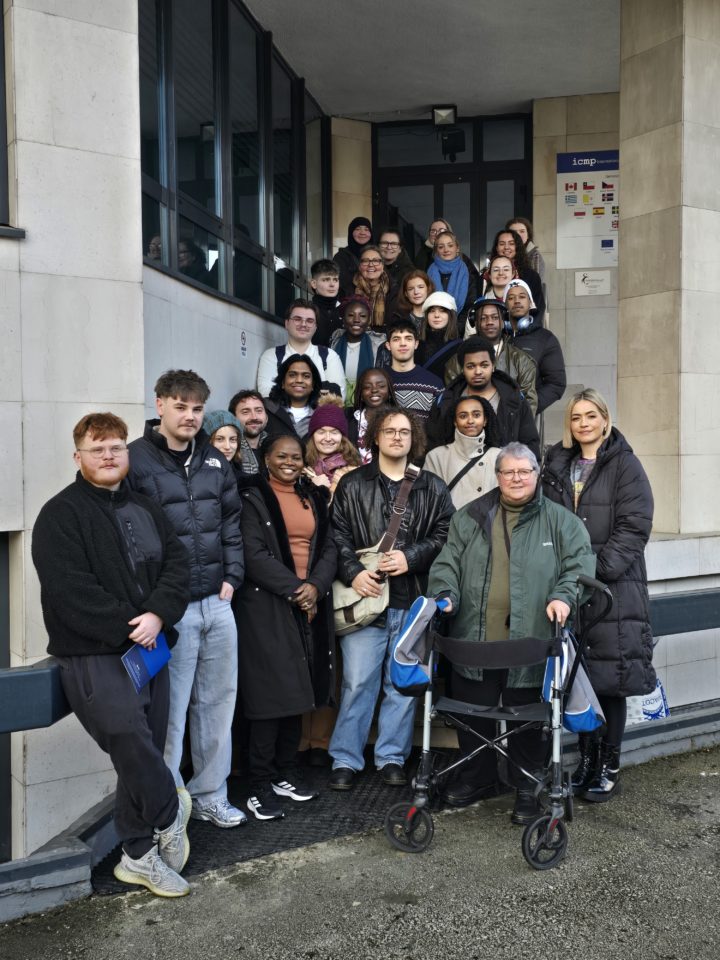
The ICMP has been a key contributor to establishing and developing Bosnia and Herzegovina’s institutional capacity to address the issue of missing persons in a non-discriminatory manner, drafting legislation to safeguard the rights of families, and introducing cutting-edge forensic methods, including the use of DNA. It is important to note that Bosnia and Herzegovina is the first country in the world to have established and adopted the Law on Missing Persons, which has influenced other countries in the region, as well as internationally, to follow its lead. We wrapped up the presentation with multiple questions and some photos.
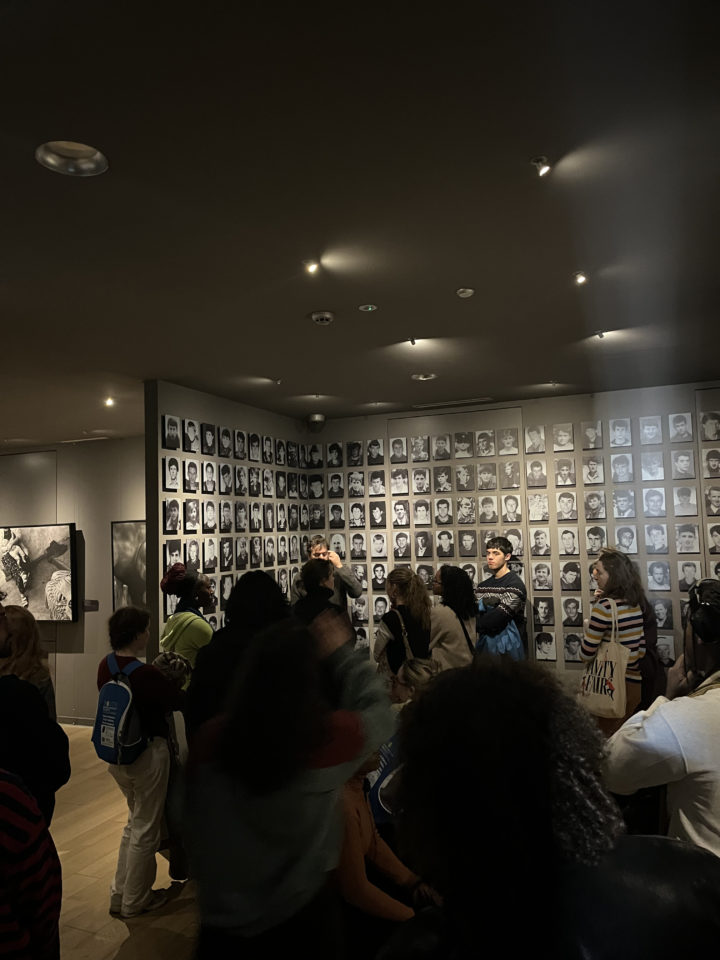
The final stop on our agenda was a visit to Gallery 11/07/95, the first memorial gallery in Bosnia and Herzegovina dedicated to preserving the memory of the genocide committed in Srebrenica on 11 July 1995 and honoring the 8,372 killed Bosniak men and boys. The permanent exhibition presents documentary scenes of Srebrenica in the aftermath of the genocide, using multimedia elements such as photographs, audio, and video to offer both factual documentation and artistic interpretation of the events of July 1995.
Our visit to the Gallery began with several informal yet deeply moving short films featuring testimonies from families affected by the genocide, as well as footage from the siege of Sarajevo. We then continued with a guided tour, starting in the first room, where the walls are covered with photographs representing a fraction of the 8,372 victims. In the second room, we encountered the powerful black-and-white photographs by Tarik Samarah, the founder of Gallery 11/07/95. His images capture the haunting aftermath of the genocide and invite reflection on the lasting impact of violence and the responsibility of remembrance. In the final section, we viewed photographs from the siege of Sarajevo that captured not only the daily brutality and hardship people were forced to endure, but also the resilience and solidarity of citizens who remained united in resistance in the face of violence surrounding them.
After gaining this knowledge, exchanging ideas with young people from Northern Ireland, we have gained invaluable insight that shapes our understanding of post-conflict societies and strengthens our commitment to continue working towards a peaceful future. Now more than ever, we are looking forward to the coming three months working as interns at PCRC.