


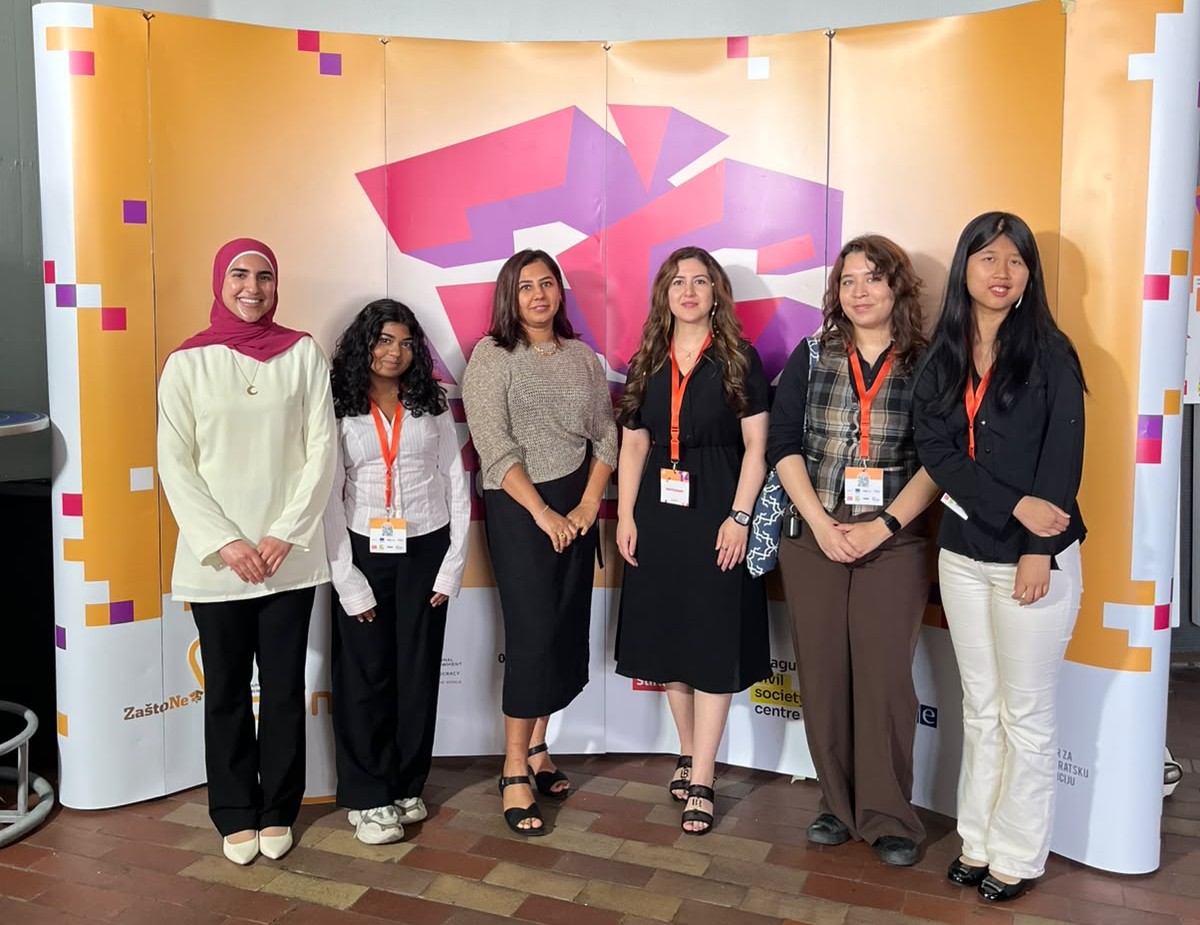
One week into the summer internship, we had the opportunity to sit in on a meeting between PCRC and Zašto Ne’s MENA fellows from Tunisia, Morocco, and Iraq. Program Director Tatjana Milovanović introduced the fellows to the modern history of Bosnia-Herzegovina and the work of PCRC, but it was also quite the learning opportunity for us.
Front and center in the discussion of Bosnia’s position in the international scene is the prospect of joining the EU. We identified a plethora of motivations for the EU to bring Bosnia into the union, including but not limited to moral obligation, anti-Russian sentiments, or interest in BiH’s natural resources. However, the stagnation of reforms in Bosnia reflects a greater issue of bureaucracy and inefficiency in the nation’s government.
Citizens often express frustration with the presence of nepotism and corruption amongst their politicians. What was identified as an ongoing paralysis of government operations has led to a sentiment of hopelessness and apoliticization amongst Bosnians, who feel betrayed. This consensus is only exacerbated by a growing affordability crisis.
Shifting the conversation towards the youth as the future of political development, we identified a hyper-awareness of the government’s lack of accountability amongst the generation, which, unfortunately, can result in a disbelief in the prospect of progress.
A fellow’s question about youth activism prompted Tatjana to dive into a recent tragedy that sparked political action in Sarajevo. A tram accident in February killed a student and left another student critically injured. This ignited mass youth protests across Sarajevo, demanding governmental accountability and transparency surrounding the incident. The mobilization led to the resignations of the Cantonal Government and the director of GRAS, although the director’s resignation wasn’t accepted by the Supervisory Board of the GRAS company, and the Cantonal Government is still in its technical mandate.
Tatjana continued by expanding on the success of environmental activism across the country. She commended local grassroots campaigns of locals that protected their lands and rivers from being developed by large corporations.
When asked about her perspective on the future, Tatjana emphasized that civil society is not just the NGOs, but rather, “We are all civil society.” This exemplifies why collaboration between organizations like PCRC and Zašto Ne is instrumental. We interns can be part of that civil society and apply lessons learned to our home countries and local contexts.
Authors: Elaine Gao, Medha Narayan, Noor Khanafer (Summer 2026 Interns)