


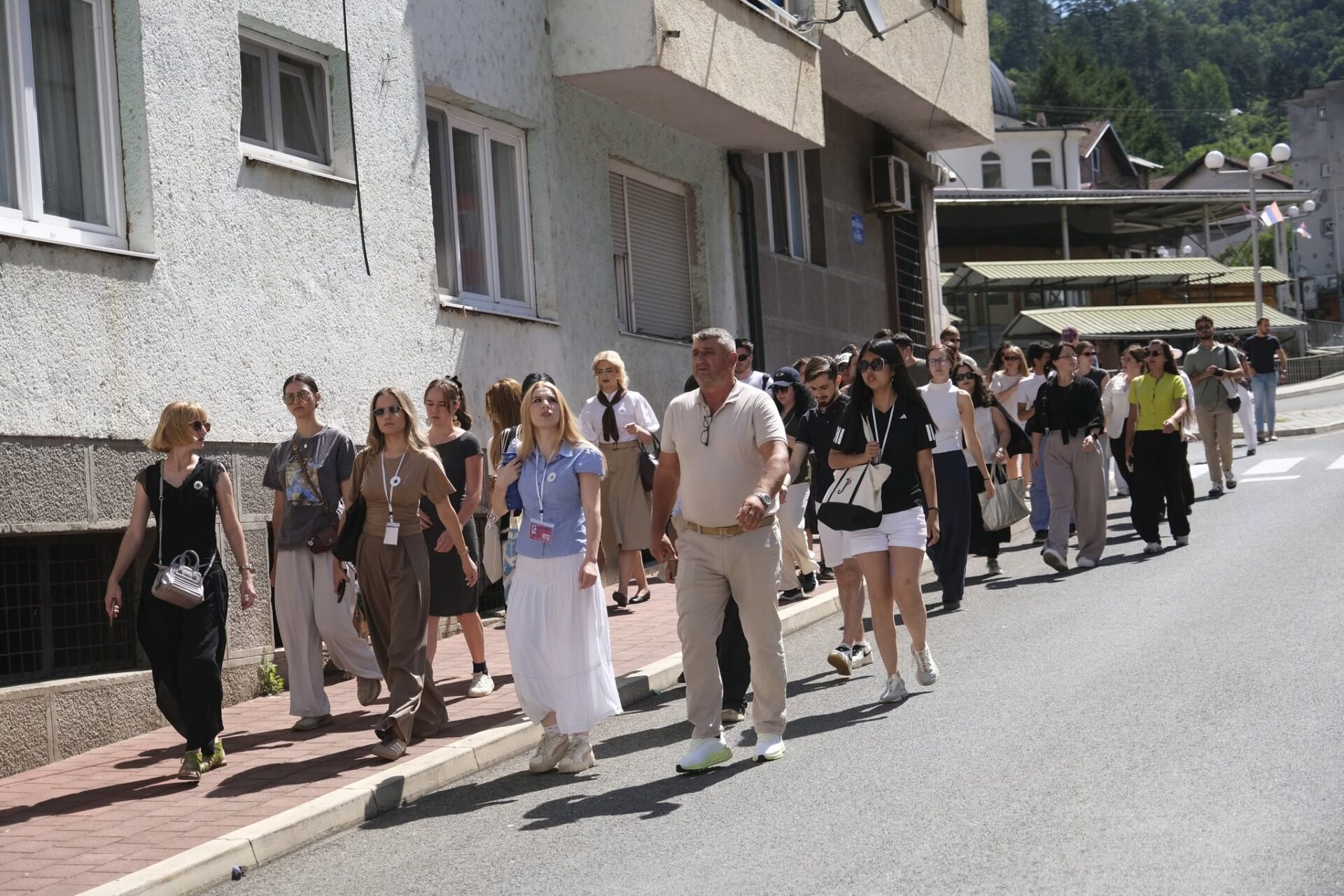
After several days of exploring the history and legacy of the Srebrenica genocide through lectures and discussions in Sarajevo, the Srebrenica Youth School shifted to lived experience. Traveling to Tuzla and Srebrenica, we engaged directly with the people, institutions, and memorial sites that continue to shape remembrance, justice, and reconciliation in Bosnia and Herzegovina.
Our first stop was the Podrinje Identification Project (PIP) of the International Commission on Missing Persons (ICMP) in Tuzla, where Senior Forensic Anthropologist Dragana Vučetić introduced us to the painstaking process of identifying victims of the Srebrenica genocide. More than thirty years later, around 1,000 victims are still missing, yet the work continues, with ten new victims being found and identified in 2026 alone.
“What struck me most was the dedication of the forensic teams,” Yoselin Colin, a senior at Yale University, shared. “Their work is emotionally demanding, requiring them to excavate potential grave sites, compare DNA samples, and reconstruct lives from fragments of bone. It was interesting to learn that as landscapes change, investigators have to rely on excavation itself and satellite imagery to identify where graves may have once existed. While this seems really hard, especially if nothing is found, every found grave and identification ultimately offers families the chance to finally bury their loved ones with dignity.”

In fact, what stayed with many of us was the atmosphere of the ICMP facility—the quietness, the weight of the work being done, and the realization that the remains in front of us represented real people with families, memories, and lives destroyed by violence. Seeing the evidence of the genocide—fractured skeletal remains and fragments of clothing recovered from mass graves—was an essential introduction to understanding the ongoing consequences of the Srebrenica genocide.
The emotional weight of the visit carried with us as we traveled to the Srebrenica Memorial Center in Potočari. Along the way, memorials dedicated to Serbian victims served as reminders that Bosnia and Herzegovina’s landscape remains marked by competing narratives of suffering and remembrance. Memory here is not only preserved but continuously negotiated.
At the Memorial Center, we laid flowers in remembrance of all those murdered during the Srebrenica genocide. As we left the cemetery, the truck carrying the coffins of the ten newly identified victims arrived. Watching local families gather to pray and pay their respects showed us how Srebrenica remains an ongoing process of mourning.
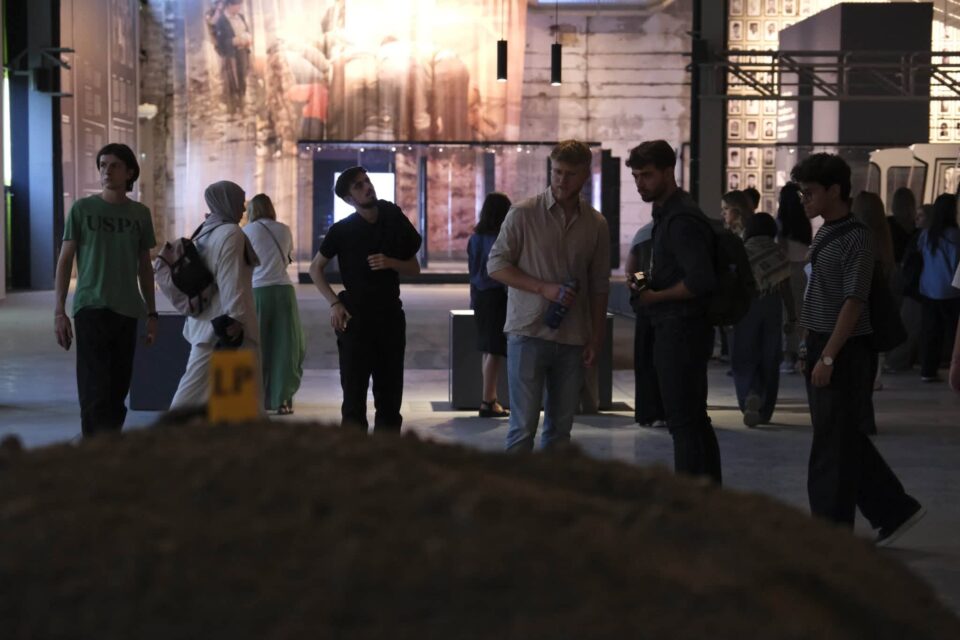
Inside the former UN base, we toured the permanent exhibition and listened to survivor testimonies. Statistics gave way to individual lives, and the enormity of the genocide became impossible to separate from the personal stories behind it.
For Bas de Wit, a Master’s student at the University of Gronigen, one moment stood apart:
“The exhibition and our guide deeply moved me, but what stayed with me most were the Dutch messages still visible on the walls. I found myself wondering how the young Dutch peacekeepers—most of whom were still boys—coped with the impossible responsibility of protecting 25,000 Bosniaks whilst being underarmed and outnumbered. I also wondered how the people seeking protection must have viewed them in those final days. As I walked out of the compound and into the sunshine, I felt warm, yet somehow cold—from the outside and within. But I was glad to visit the center. As a Dutchman, I believe I have the responsibility to remember, and after this experience, I know I will for the rest of my life.”
The following day, we met Mothers of Srebrenica, whose willingness to share their experiences left a lasting impression on us. Listening to them speak about unimaginable loss alongside resilience and strength needed to rebuild their lives was powerful.
We also visited the House of Good Tones, a community organization that brings together children from different ethnic backgrounds through music and other creative activities. In a town often defined by its past, the organization represents hope for its future by creating spaces where young people can build friendships that transcend ethnic divisions.
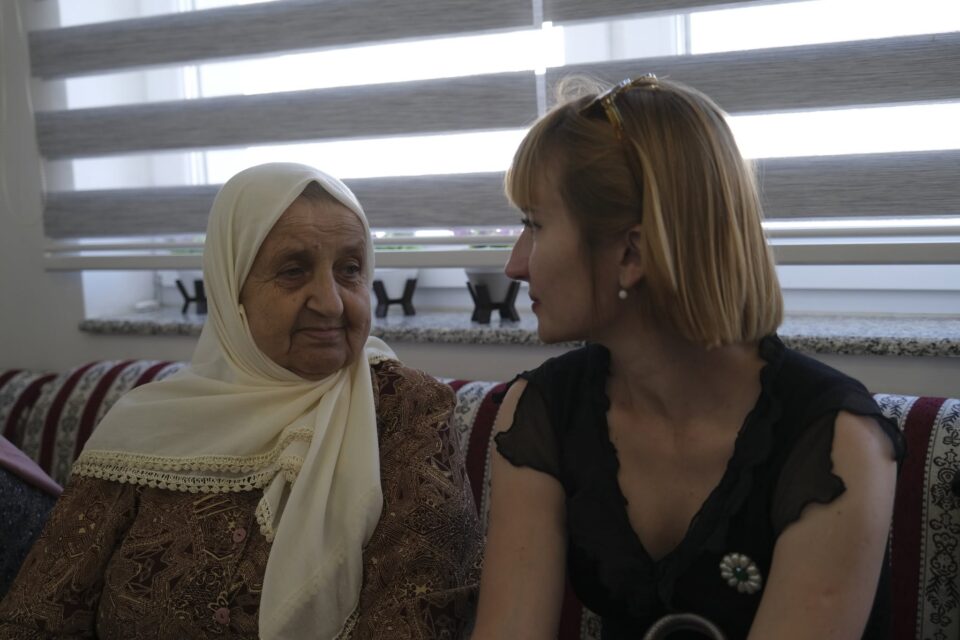
Eloise Burton Carter, a postgraduate at the University of Sussex, was especially impressed by the organization. She reflected how “after an emotionally difficult week learning about the Srebrenica genocide and the enduring impact it has had across generations, I found it especially powerful to learn about the positive work taking place in and around Srebrenica. I was inspired by the stories of children being brought together through the joy of music, and how these experiences can stay with them into adulthood.’’
Meeting representatives from the OSCE field office in Srebrenica and MFS EMMAUS further expanded our understanding of post-conflict recovery. While one organization works to strengthen democratic institutions and human rights, the other provides direct support to vulnerable members of the local community through programs for children (Boarding Accomodation) and elderly residents (“Hatidža Mehmedović’’).
One of the most powerful experiences of the week was walking the final kilometers of the Marš Mira (Peace March), which retraces part of the route taken by thousands of Bosniak men and boys attempting to escape genocide in July 1995. Although we participated in only the final section, many of us felt humbled by the experience. As international participants, we were conscious that this march is first and foremost an act of remembrance for survivors and families. Feeling like outsiders ultimately deepened our appreciation for the profound grief carried by those around us and reinforced the importance of approaching remembrance with humility and respect. This experience also encouraged many of us to do the complete 100 kilometer Peace March one day.
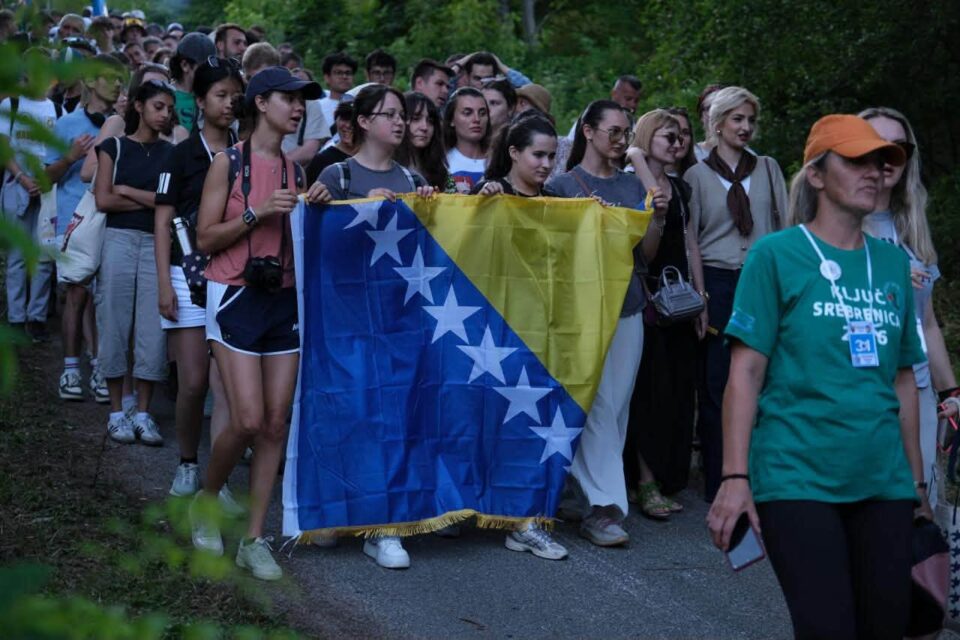
That reflection continued during the 31st Srebrenica Commemoration. Watching thousands gather to honor the victims, alongside the burial of the newly identified remains, demonstrated that remembrance is not confined to the past but continued to shape the present. One moment particularly resonated with our Bosnian participant, Amar, who observed how the bright skies gave way to rain just after the burials concluded:
“At the start of the commemoration the weather was beautiful—blue skies and sun. It felt wrong for such an emotional day. But shortly before the burials commenced, the sky grew cloudy, and almost immediately after the coffins were laid in the ground, it started to rain.’’
Amar further shared a Bosnian belief that rain following prayer signifies that the prayer has been heard, a reminder that memory and spirituality remain intertwined for many families. As a result, Amar found this to be the perfect poetic ending to the commemoration.
Following the commemoration, our group helped clean the cemetery grounds. Though simple, the act gave many of us a sense of purpose after spending much of the day observing others’ grief. For Lianna Lung, a senior at Stanford University, the moment felt especially meaningful:
“I was really grateful for the opportunity to help clean up trash at the cemetery. During the commemoration, I, like many others, felt somewhat out of place, passively observing the grief of others while being powerless to help. Despite it being a small action, having something tangible to do—beautifying this final resting place for many—helped ground me.’’
Later, we visited an exhibition of charcoal portraits depicting several Mothers of Srebrenica. For Yoselin, the portraits offered a meaningful reflection:
“Looking into each woman’s eyes, it felt as though I could glimpse the weight of everything she had endured. Reading their stories made it impossible to see them only as survivors of genocide; they were mothers, daughters, neighbors, and individuals whose lives were forever changed by violence. Each woman survived the war, but lost countless loved ones. The exhibition reminded me that while the Bosnian War ended decades ago, its consequences continue to shape everyday lives for those who lived through it, making remembrance not only an act of honoring the past but also of recognizing the resilience required to carry it forward.”
Our final visit was with Enver Šečić, a survivor of the Death March. Hearing his story and answers to our questions offered yet another reminder that history lives on through those who experienced it firsthand. It is both an extraordinary gift and immense responsibility for those privileged enough to listen.
Amid the difficult conversations and emotional visits, there were also moments of joy. Shared meals with local community members, late-night conversations, card games, tennis matches, and countless discussions with fellow participants became an essential part of the learning experience.
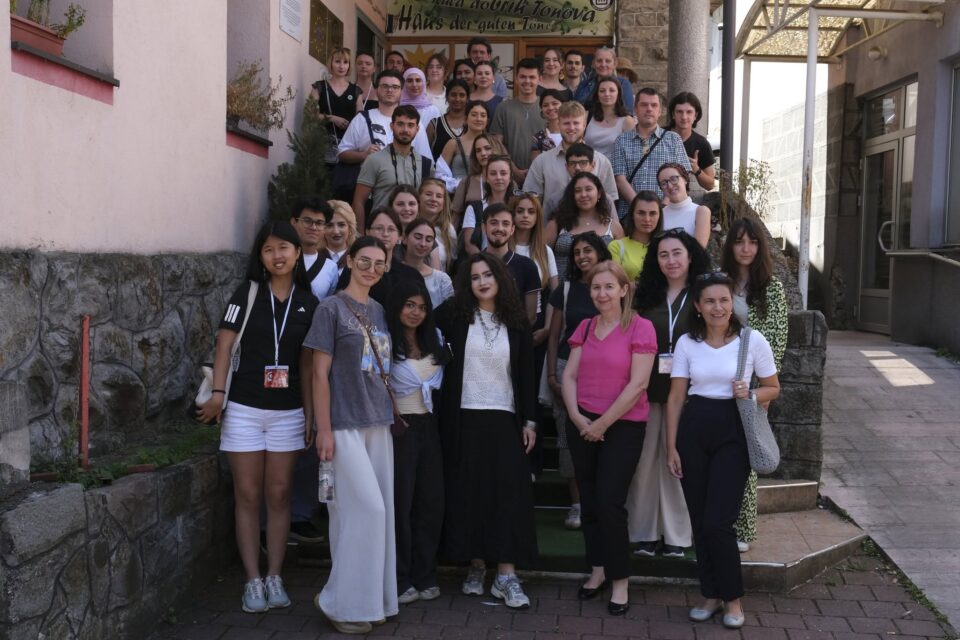
Lejla, a Bosnian-American, reflected after an unexpected conversation with a local resident:
“During our time in the camp I had the pleasure of meeting the owner, Hamad. We sat at a table under the trees speaking. Although this interaction wasn’t one I had expected, it was one that I’m grateful for. Hearing about his story and interacting with him made the whole experience worthwhile. It’s moments like this one that keep the idea of peace and connection alive.”
The second half of the Srebrenica Youth School transformed our understanding from learning about genocide to witnessing its enduring human impact. Our time in Tuzla and Srebrenica reminded us that education is only the beginning. True understanding comes from listening, witnessing, and carrying these stories forward.
By: Bas de Wit and Yoselin Colin