


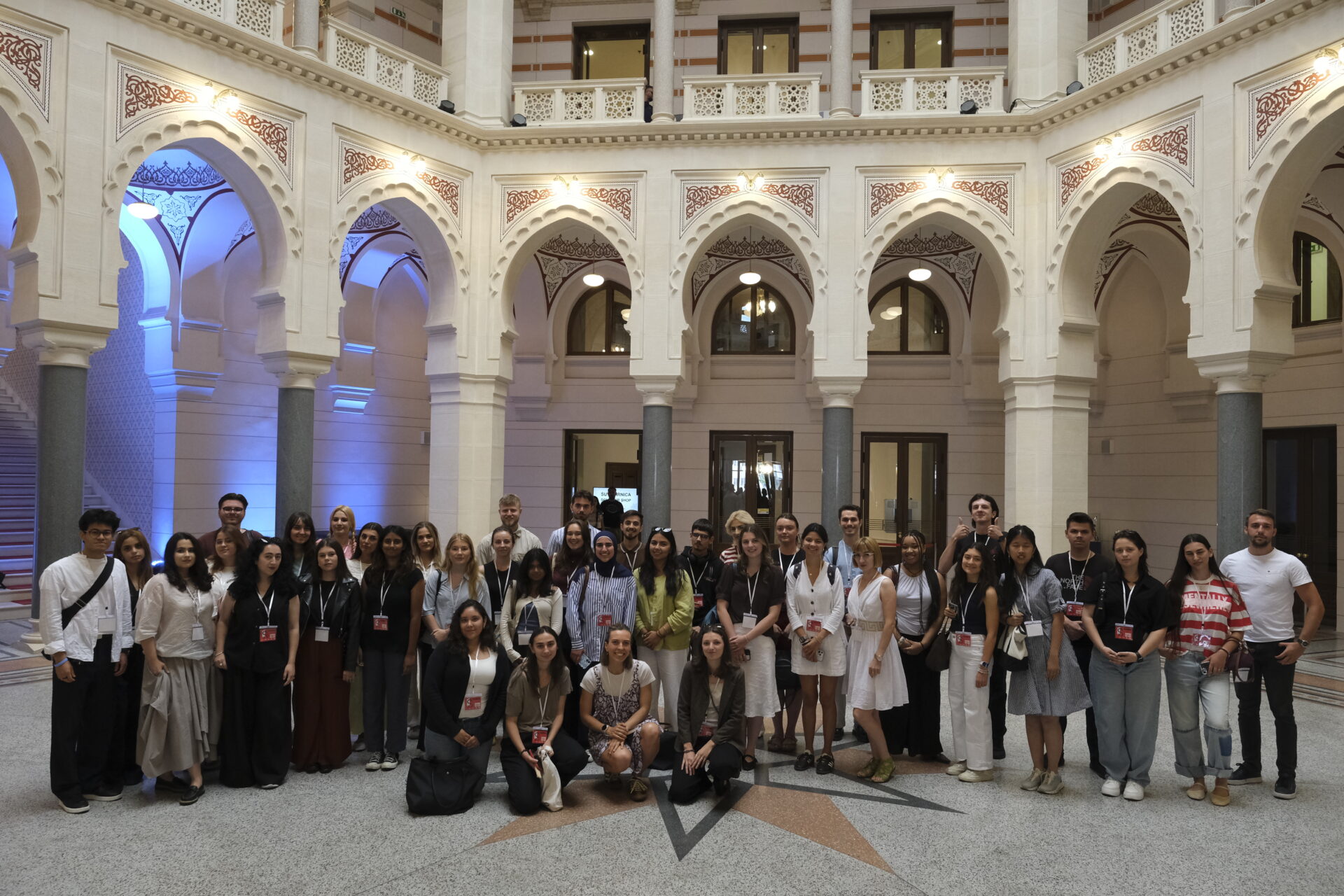
Since early June, the Post-Conflict Research Center’s summer interns have delved into peace research, spending long hours analyzing theories, reports, and histories of conflict and reconciliation. In July, however, those lessons stepped beyond research. As both participants and assistants, we joined young people from across the Balkans in PCRC’s 7th Srebrenica Youth School. Academic concepts have turned into deep conversations, lived experiences, and shared reflection centered around people.
Over the first three days in Sarajevo, we have explored questions surrounding the legacy of the Srebrenica genocide, hearing from a diverse range of scholarly experts, international organizations, and advocates about transitional justice, commemorations, accountability, and contemporary political phenomena surrounding the genocide. Charlotte O’Brien, an intern who studies at the University of Oregon, says hearing from them has been “meaningful and enriching,” providing “preparation for what is to come.”
For many of us, the academic concepts addressed in the lectures and panels are not new. As students studying various social sciences, we have encountered theories of transitional justice and memorialization in university classrooms, often through case studies and textbooks written far from the societies they describe. Hearing Professor Goran Šimić introduce the subject was different. Rather than approaching Bosnia and Herzegovina as a case study, he spoke as a local who has spent decades researching post-conflict societies.
His lecture “Transitional Justice in BiH: 30 Years Later” challenged us to look beyond the courtroom, explaining that while criminal trials establish facts and hold perpetrators accountable, they cannot fully repair the harm left behind. “The human brain is made to remember, not forget,” he shared.
What resonated most, as Yoselin Colin, an intern from Yale University, shared, was “his insistence that transitional justice is not about achieving perfect justice, a seemingly impossible goal, but about creating the conditions for people to continue living without fear and for societies to rebuild trust after violence.”
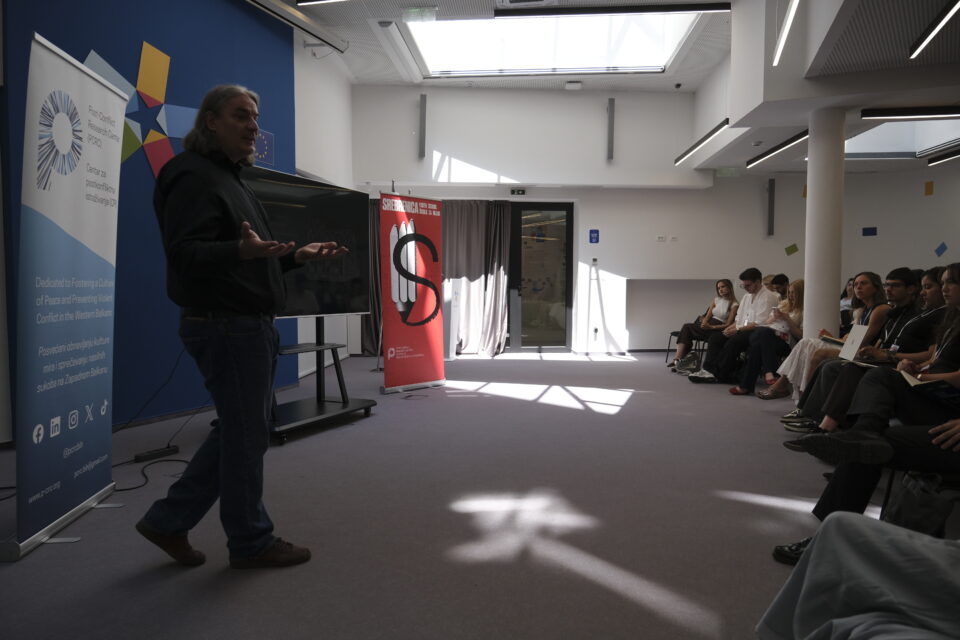
One of the Youth School’s greatest strengths is the fact that we are learning not only about BiH, but also from scholars, legal experts, and civil society leaders who are from the region. Their firsthand perspectives have added a depth and proximity that is difficult to replicate in many American universities.
During the Tuesday afternoon workshop “How is memory defended in public spaces? Memory activism as civic practice” with Milica Pralica, an activist in Banja Luka, interns had the opportunity to apply experiences from their hometowns and recent traveling to the timely issue of memory activism. Just the weekend before, a few of us visited the capital of Banja Luka and saw graffiti glorifying war criminals, but Milica put this into perspective, sharing with us that locals actually tried to remove this graffiti but could not effectively stop the hooligans responsible—the people-centered interpretation beyond our mere assumptions. This workshop invited us to design memorialization initiatives for atrocities not only in Bosnia and Herzegovina, but also in China, Palestine, and Spain. We realized that activism is not the sole right of a few individuals, but rather all of our rights, and in fact, all of our responsibilities.
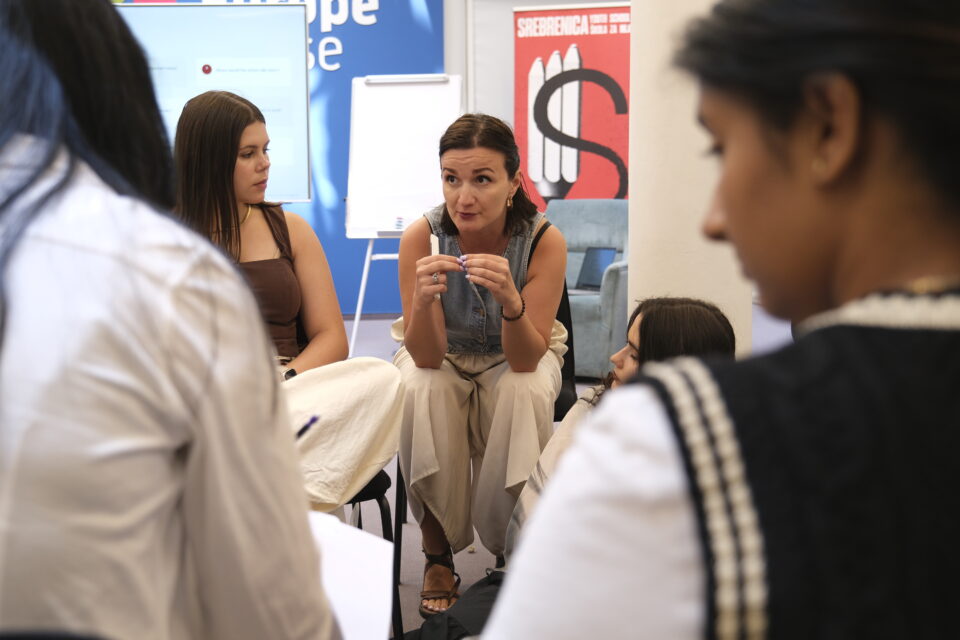
What were just as valuable were the conversations we had with each other. Even though we come from more than 10 different countries and have significantly different experiences growing up, we are still able to connect over a cup of coffee, our favorite John Steinbeck novel, and how we have all reckoned with intergenerational trauma and resilience.
According to Lianna Leung, an intern from Stanford University, she really appreciated being able to talk with someone who had just come from Rwanda, comparing peace education, and someone from South Africa who could share about the differential approaches to truth commissions and amnesty.
Likewise, Simeon Simov, an intern from the University of Tübingen, felt that we were all benefiting from the stories we shared with each other.
One of the most profound moments for many interns came during our visit to Gallery 11/07/95. Interns lingered in front of photographs, processing what many were seeing for the first time. The first thing visitors encounter when entering the Gallery is especially powerful: a wall covered by images of the men and young boys murdered in the Srebrenica genocide; seeing their ordinary and often youthful or smiling faces before learning what happened to them immediately sets the tone for the museum. It also shows the immense atrocities that followed.
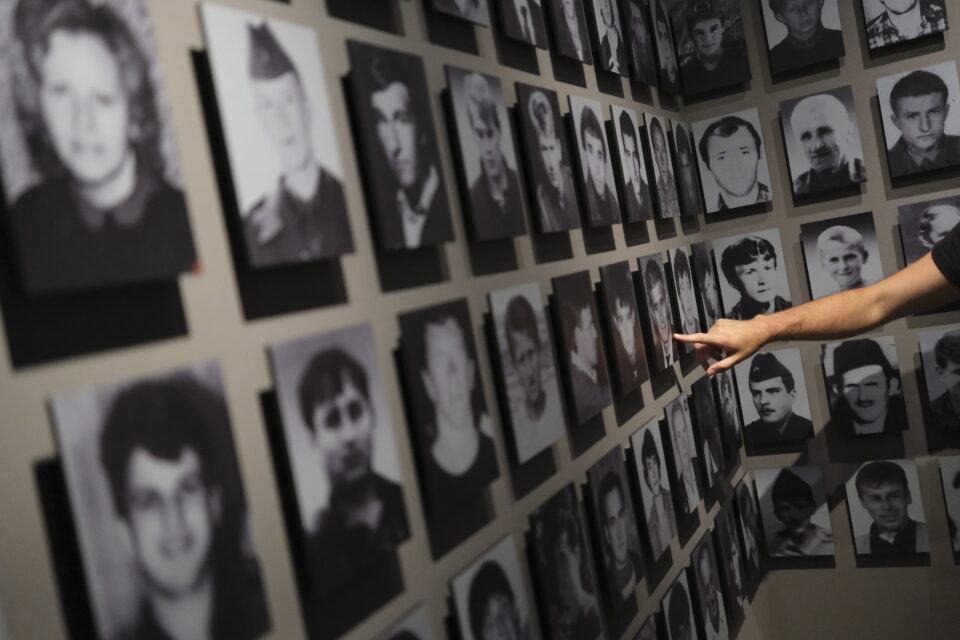
However, not all photographs documented violence. Many captured ordinary moments like a child playing outside in the grass or a teddy bear on the couch; essentially, everyday routines and objects that reflected lives interrupted by war. “Oftentimes, I felt like the quiet and dimly lit atmosphere of the museum made me want to reflect more, making it impossible to rush through the space (as I often find myself doing in museums) without confronting the lives and stories behind each photograph and video in the exhibition,” Colin shared. The Gallery reminded us that the Srebrenica genocide should not only be remembered for the lives taken, but also for the everyday lives, memories, and futures that were violently disrupted.
As we headed to Tuzla and Srebrenica for the second half of the Youth School, we took one lesson that has already become clear: this week is not only an opportunity to learn about the past, but for us to build the knowledge, empathy, and relationships needed to shape a more just future. These conversations have given us an understanding of what happened in July 1995, and why remembrance, accountability, and education remain vital today.
By: Elaine Gao and Yoselin Colin